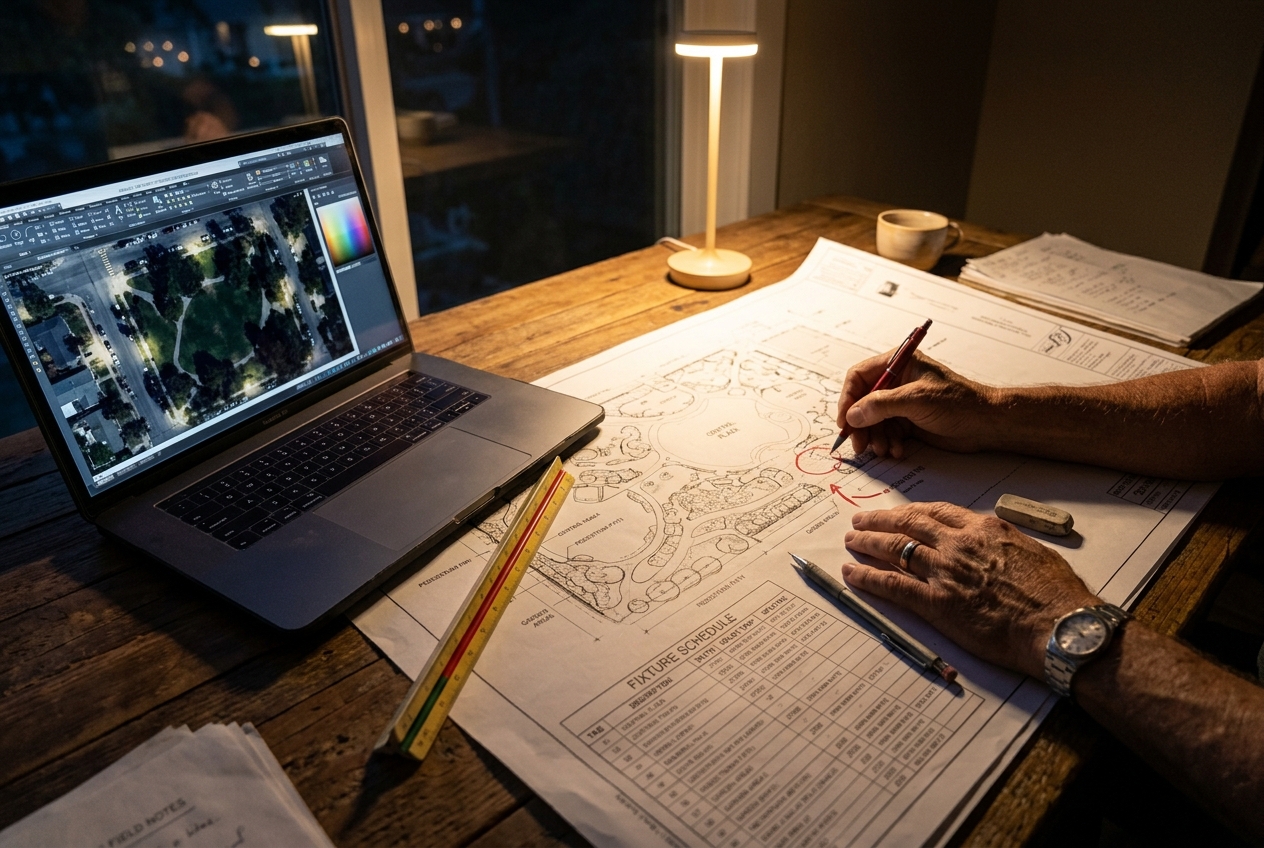
What the Energy Code, CALGreen and local ordinances ask of site lighting, and a free calculator that turns your fixture schedule into a compliance checklist.
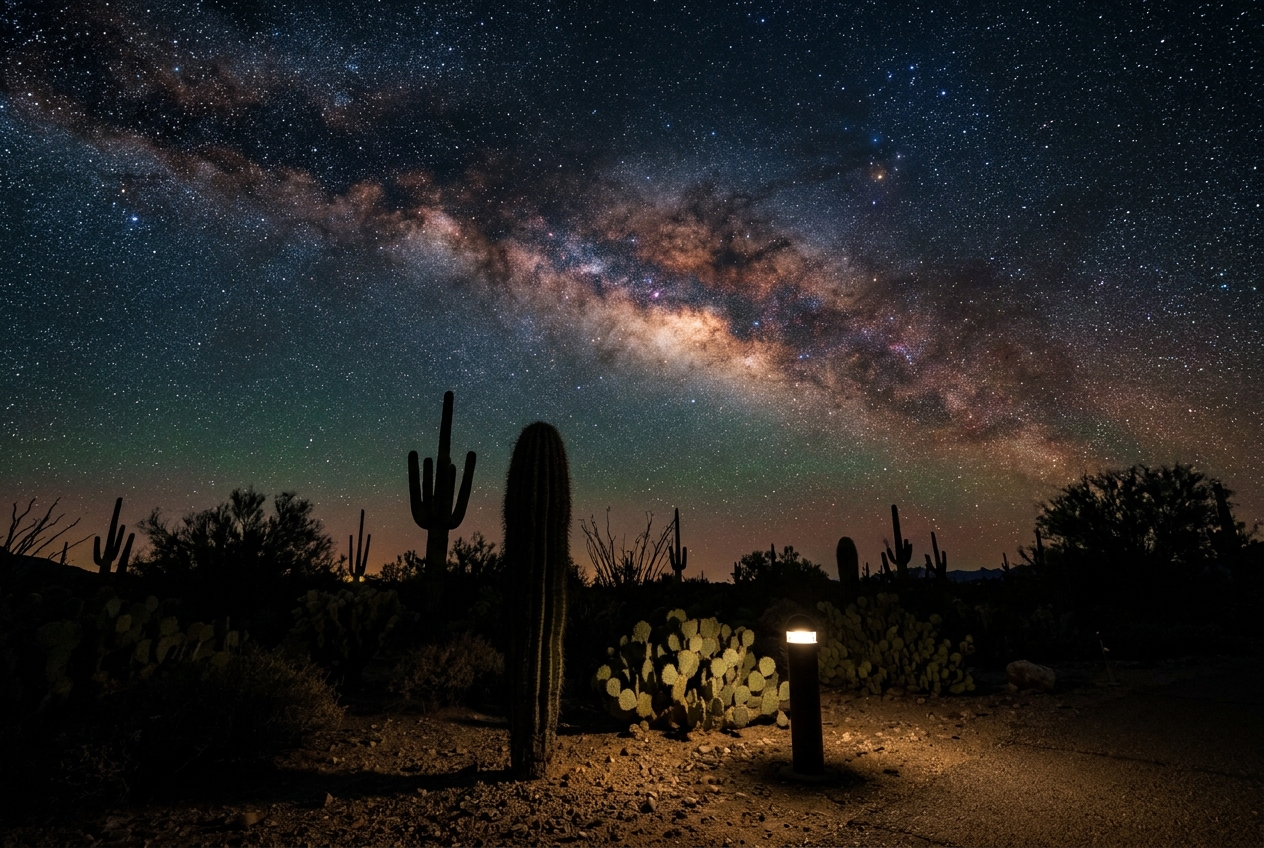
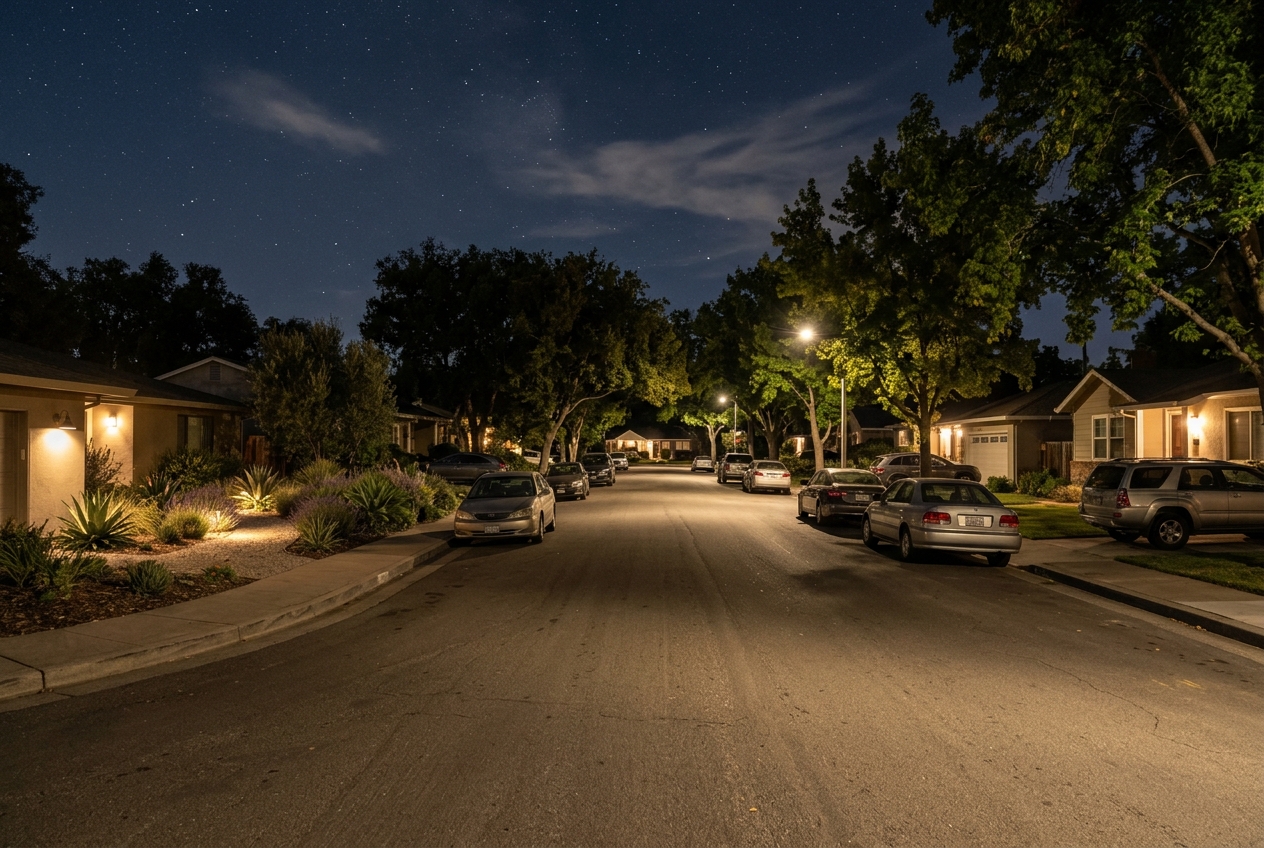
Every outdoor light that points up or sideways instead of down onto the task adds to sky glow, the haze that washes out stars over cities and, increasingly, over the countryside. A large majority of North Americans can no longer see the Milky Way from home. Dark sky design is how landscape professionals light a site well without paying that price.
A garden can be lit and still sit under a sky full of stars.
Wildlife
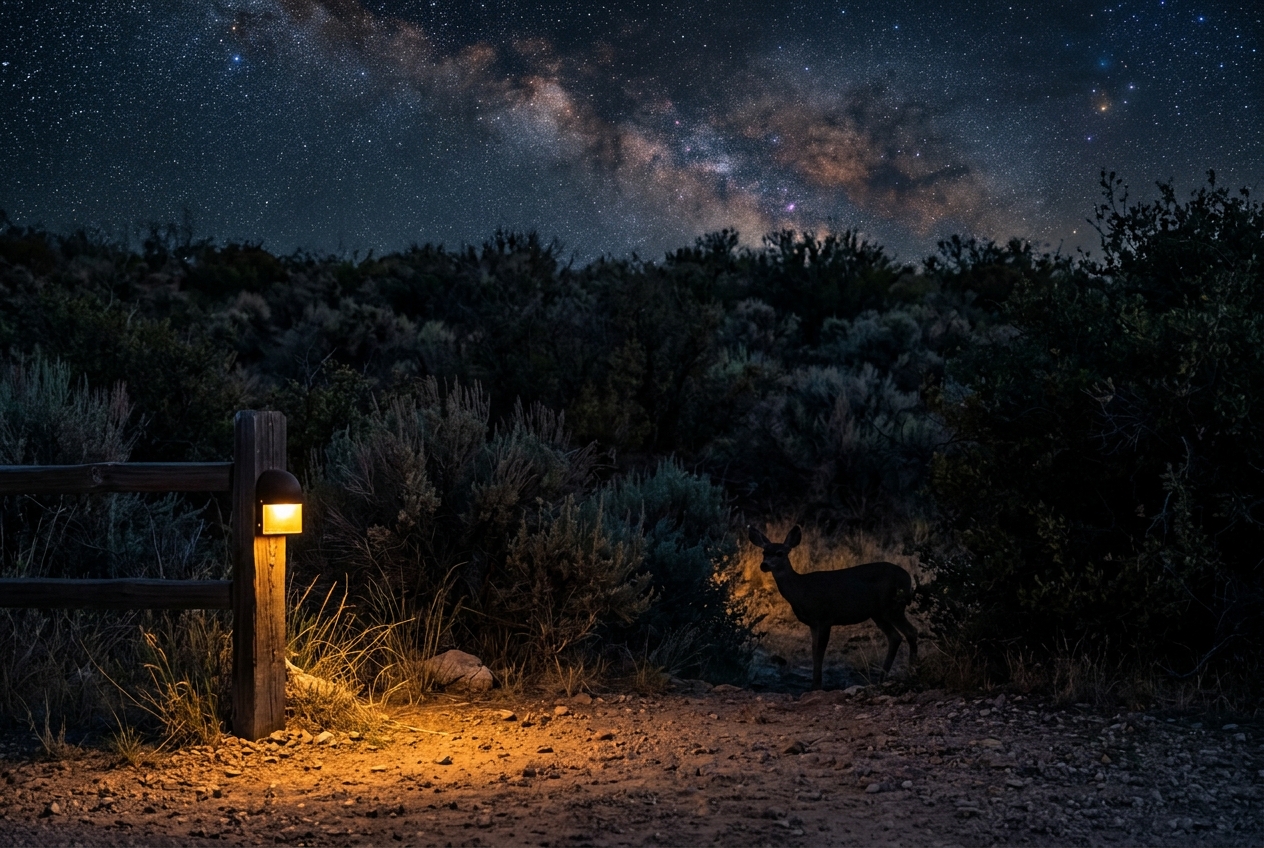
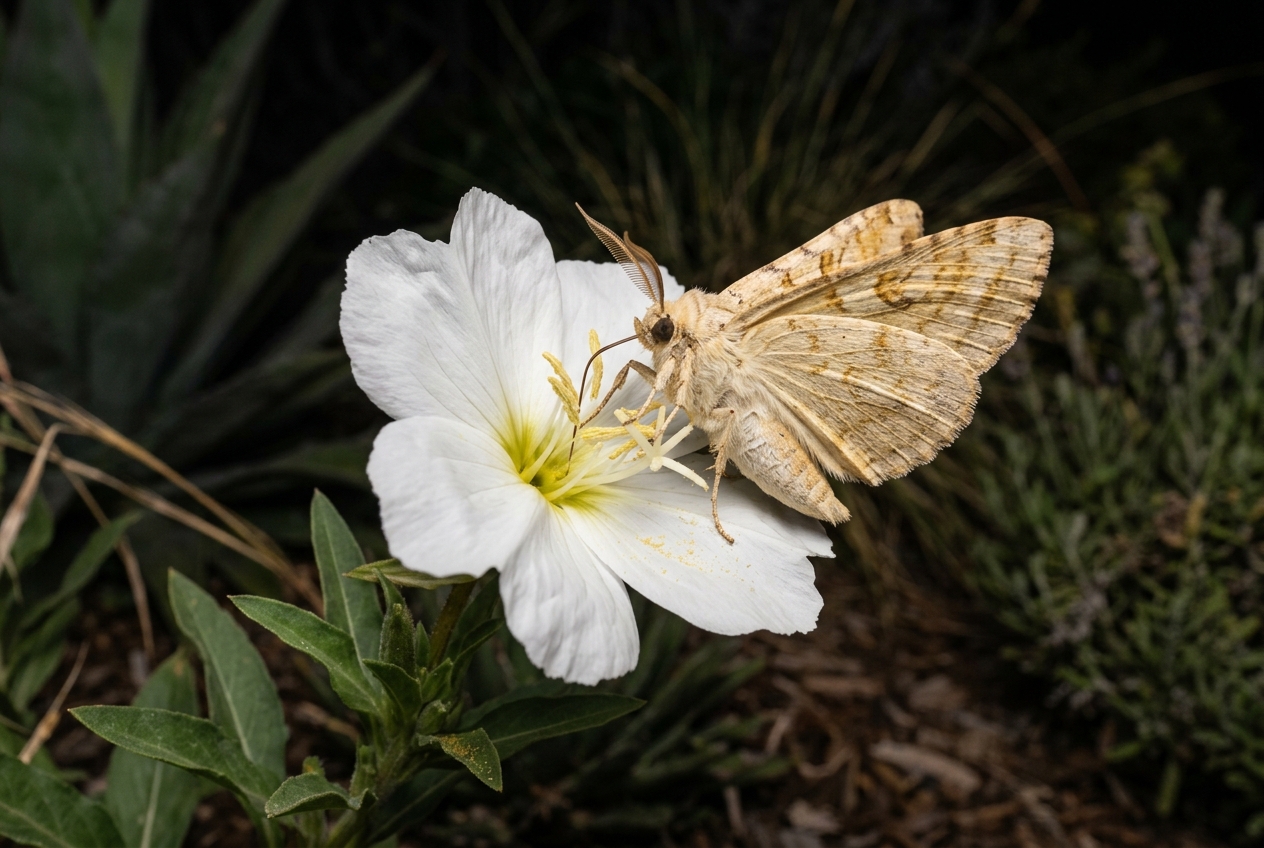
Migrating birds, moths, bats and other nocturnal animals use darkness to navigate, feed and breed. Bright, blue-rich light can pull them off course or keep them away from habitat.
People
Light at night, especially blue-rich white light, can disrupt sleep rhythms. Warm, dim, shielded lighting is easier on neighbors and on your own bedroom window.
Energy
Light that escapes upward or sideways does no work. Right-sizing and controlling fixtures cuts energy use and operating cost.
Plants
Constant night light can shift flowering and leaf timing in nearby plantings and draw pollinators away from the flowers that need them.
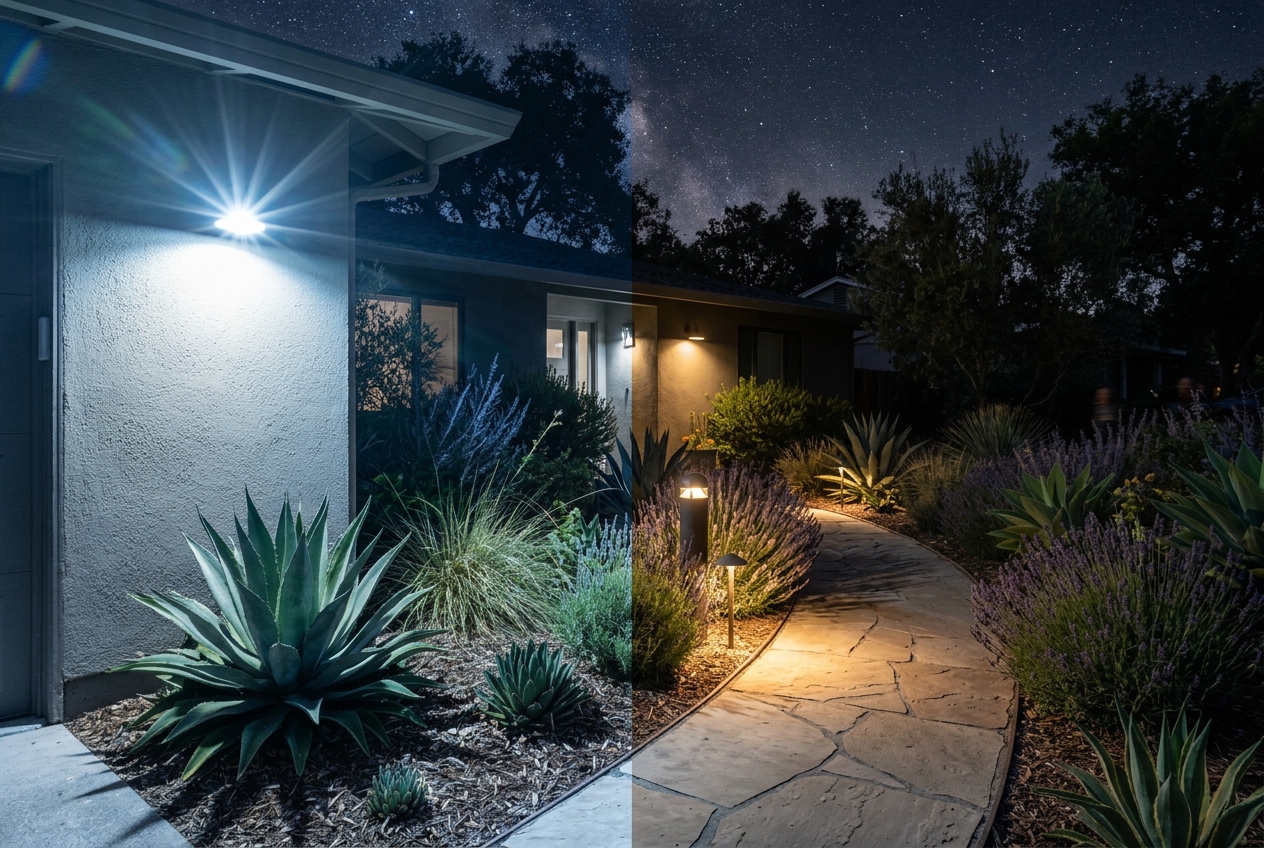
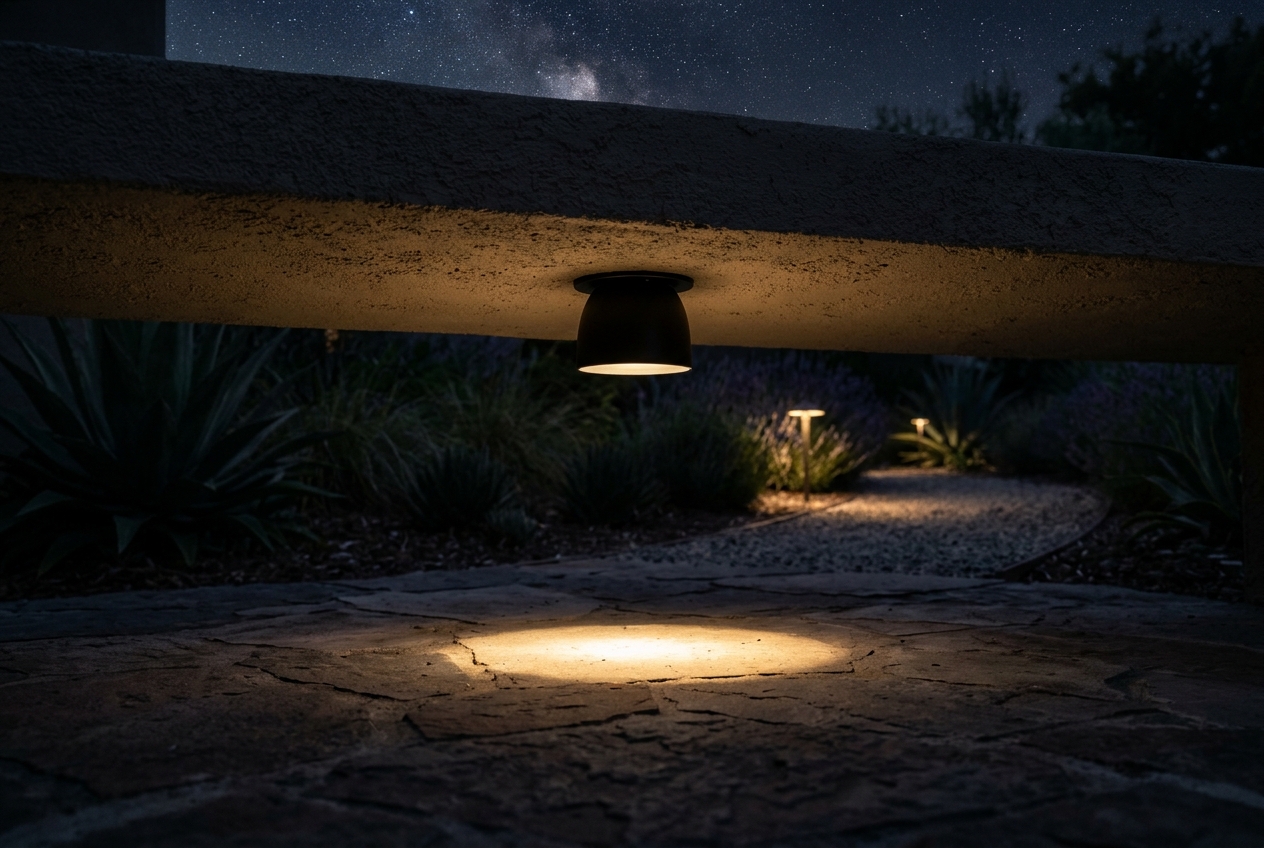
Same patio, two approaches: glare and spill on one side, warm shielded light on the other.
Five principles of good outdoor light
Useful: light only what you need to see or secure.
Targeted: aim light down and shield the source.
Low level: use the lowest lumens that do the job.
Controlled: timers, motion sensing and dimming.
Color: warm light, commonly 3000K or lower, and amber near habitat.
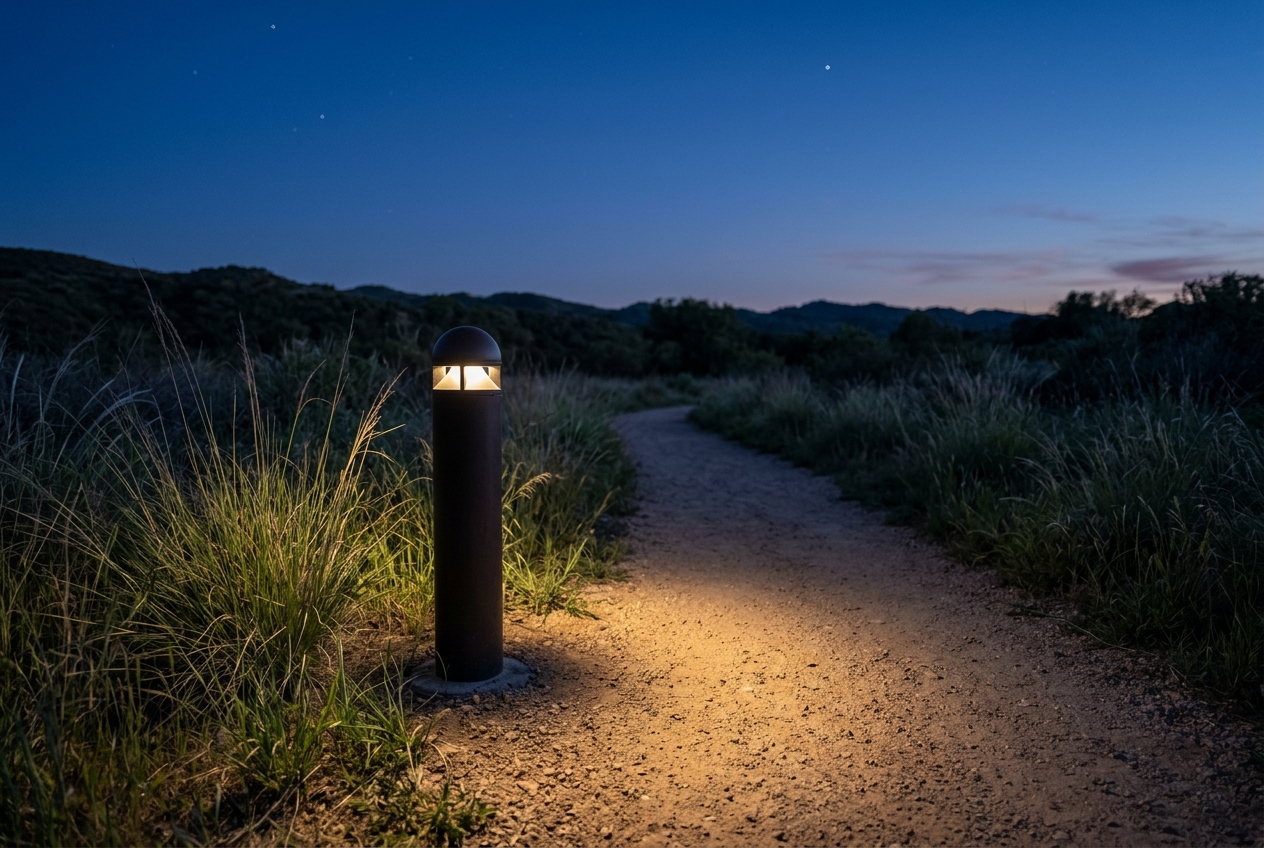
Near habitat, low amber light on the ground keeps the edge dark.
California dark sky rules: three layers, not one law
There is no single statewide “Dark Sky ordinance.” Outdoor lighting on a landscape project is governed by overlapping rules, and the strictest one controls.
Energy Code (Title 24, Part 6)
Sections 130.2 and 140.7 cover luminaire shielding, outdoor lighting controls and allowed lighting power by Lighting Zone (LZ0–LZ4, defined in Part 1, §10-114).
CALGreen (Title 24, Part 11)
Section 5.106.8 applies Backlight, Uplight and Glare (BUG) limits to luminaires of 6,200 lumens or more, varying by lighting zone.
Local ordinances
Cities and counties can be stricter than the state, often following the IDA/IES Model Lighting Ordinance: shielding, uplighting bans, CCT caps, curfews. Local rules govern where they are stricter.
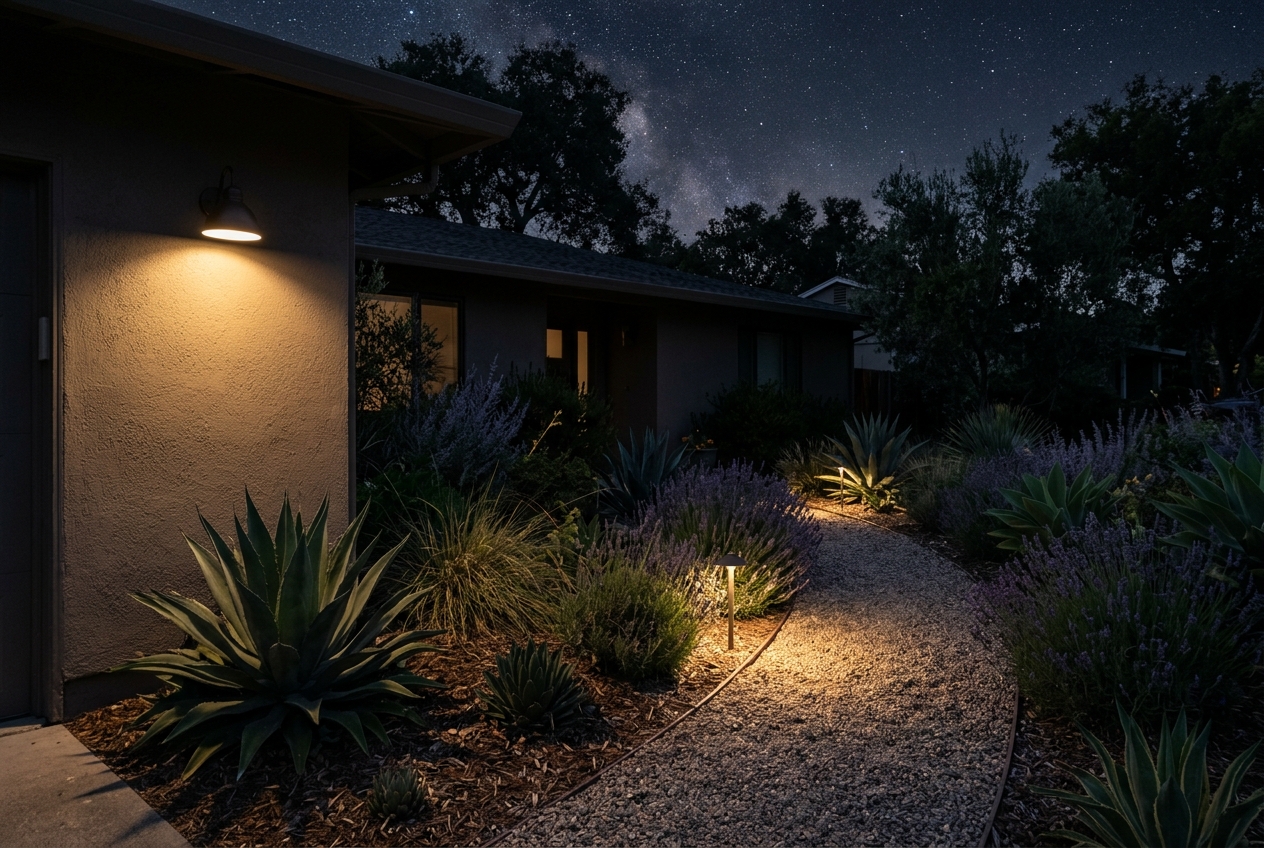
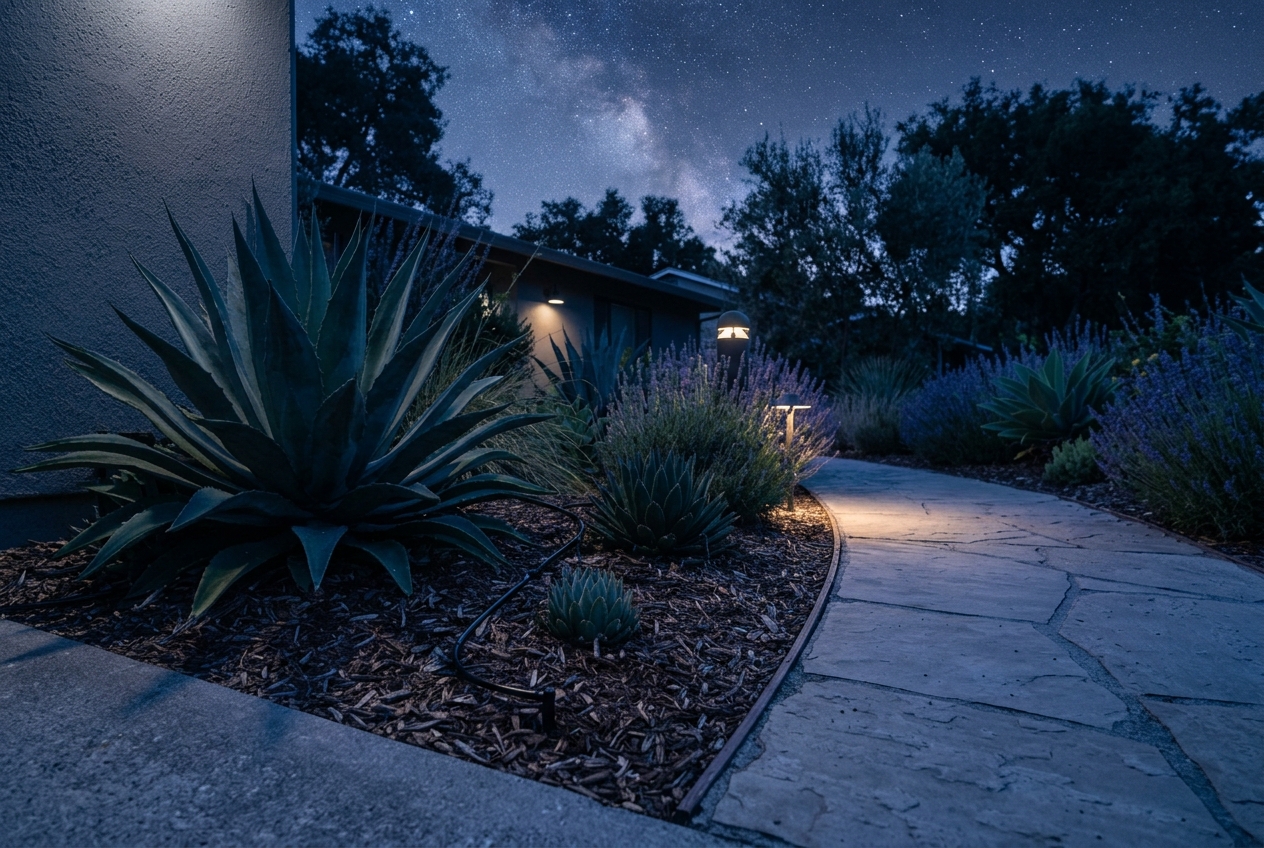
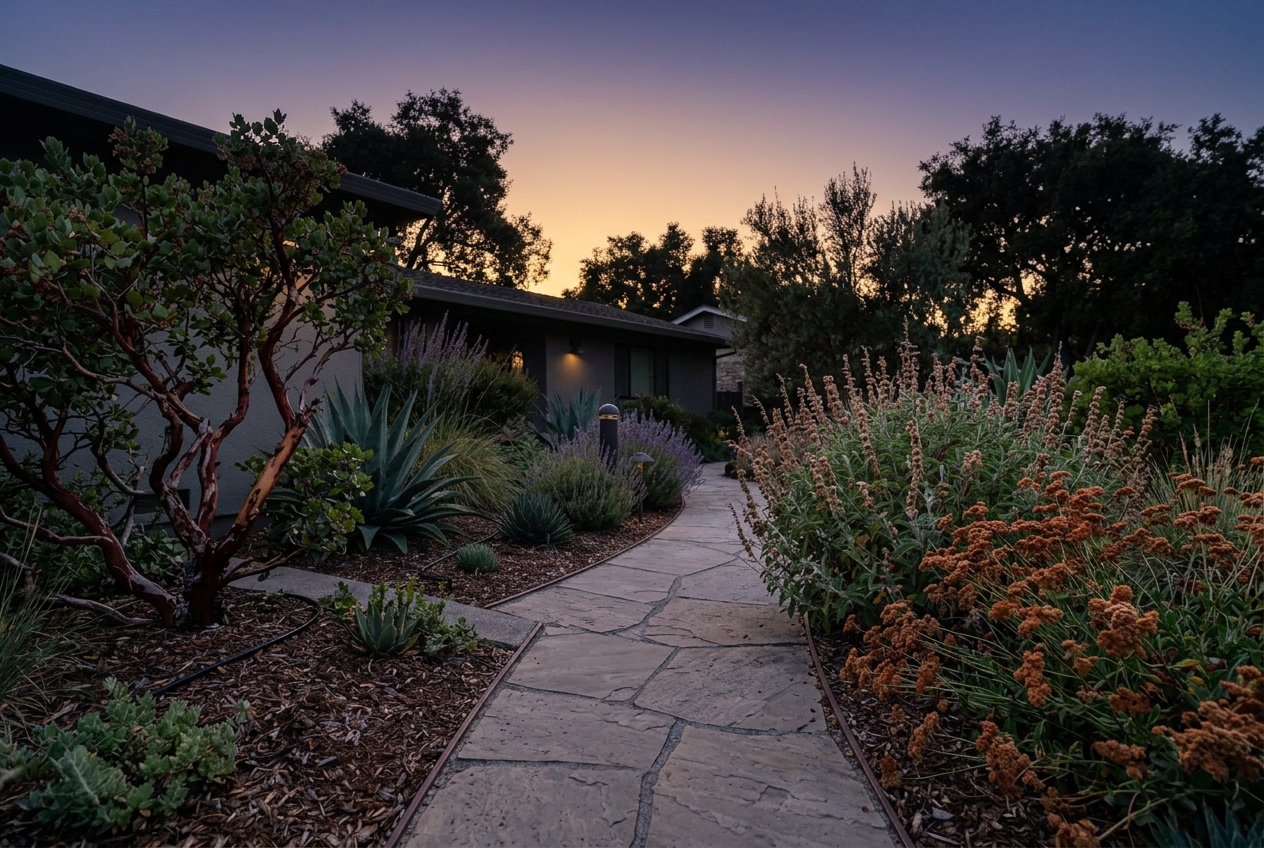
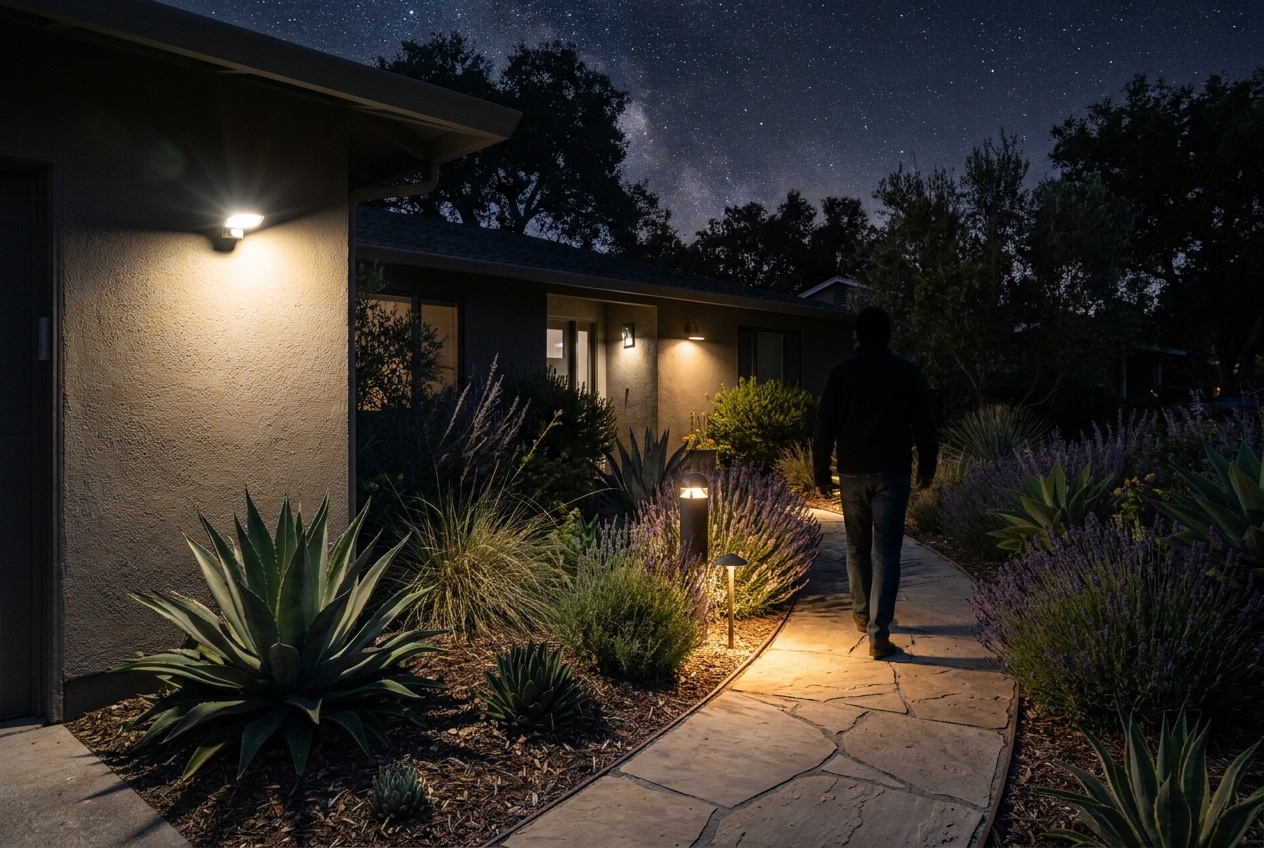
Shielded, warm, low-level light keeps the garden usable and the sky visible.
Lighting zones in one minute
Zones set how much light a site may use. LZ0 is undeveloped parkland and LZ4 is high-activity urban. Your jurisdiction designates the zone, so confirm it with the planning department before specifying fixtures.
Dark sky fixture checklist calculator
Enter your fixture schedule and your project’s limits. The tool flags each fixture and produces a printable checklist. The default limits are conservative dark sky targets, not quotations of code. Replace them with the values in your local ordinance and the current CALGreen Table 5.106.8.
Fixture / tag
Qty
Lumens
CCT (K)
B
U
G
Fully shielded
Site-wide controls
BUG ratings and plant microclimates
BUG ratings come from IES TM-15 and describe where a luminaire throws its light. Backlight is light behind the fixture, uplight is light above horizontal, and glare is light at high angles that hits the eye. The same numbers tell you what your fixture does to the planting around it.
Rating
What it affects in the landscape
Design response
Backlight (B)
Spill onto neighboring property, habitat edges, and the shaded side of shrubs and trees
Keep low-B fixtures on the side away from natural areas and property lines; use landscape structure to cut off spill
Uplight (U)
Sky glow, and light striking canopy where birds, bats and insects roost or feed
Choose U0 and aim light down; avoid tree uplighting
Glare (G)
Disorientation of wildlife and people; bright spots that bleach adjacent plantings
Shield the source, lower mounting height and use lower lumens
Plant palette and lighting, together
Artificial light at night can disrupt flowering and leaf-drop timing in nearby plants and draws pollinators and nocturnal insects away from where they are needed. Treat lighting as part of the planting plan:
Put low-activity native and night-pollinated plantings in the darkest zones and keep fixtures out of them.
Light paths and entries, not planting beds.
Keep warm CCT and low lumens near habitat, bioswales and wild edges.
Record fixture positions on the same plan as hydrozones so both can be reviewed together.
Timers, motion sensors and step-dimming
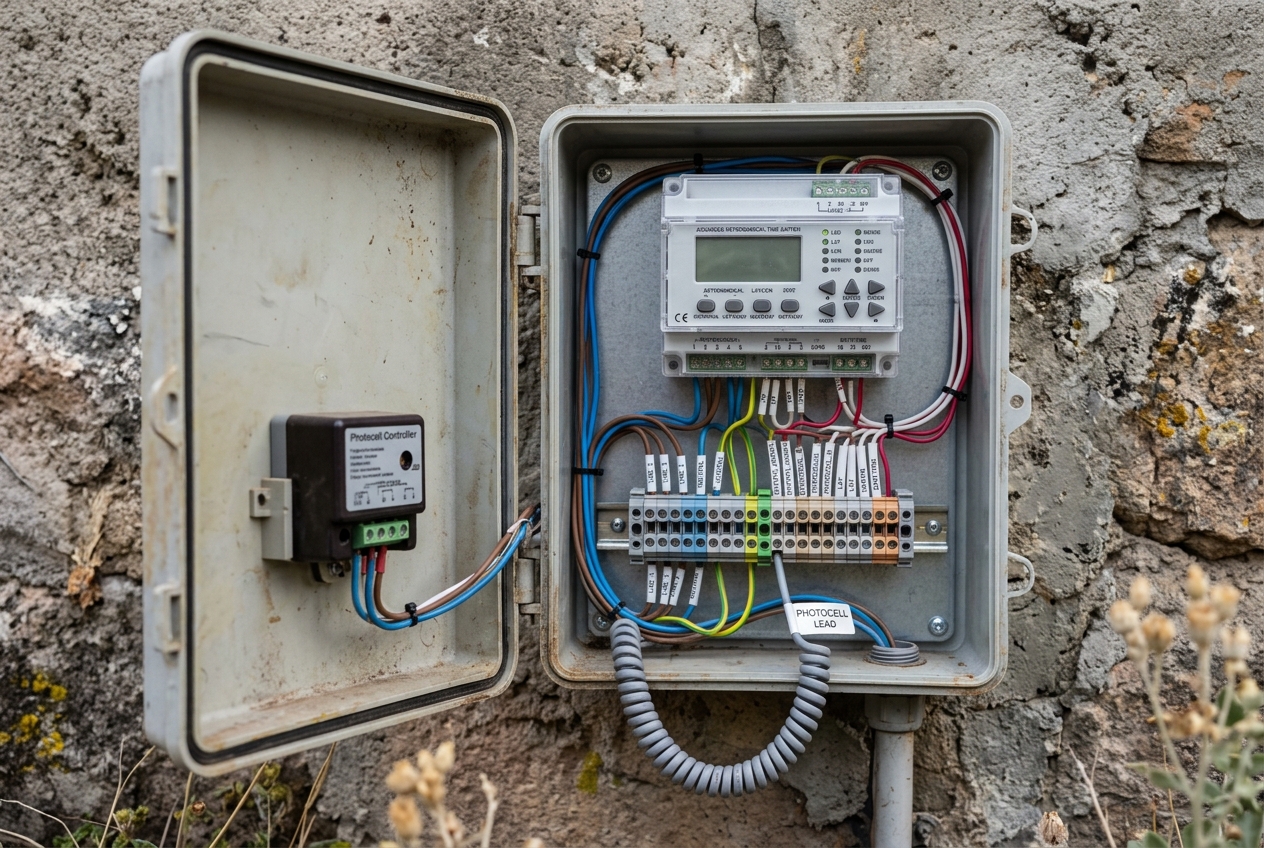
Controls reduce light when it is not needed, which is the part of dark sky practice that saves the most energy and the most sky. Requirements differ by project type and code cycle, so confirm the current Energy Code sections for your permit.
Astronomical timers
Switch lighting by sunset and sunrise calculated for your location, so schedules stay correct through the seasons without manual resets.
Motion sensors
Hold security and pathway lighting at a low level and raise it when someone is present.
Step-dimming drivers
Drop output after hours, for example to a fraction of full output, then return to full when occupancy is detected.
Finding your local dark sky ordinance
Search the municipal or county code for “outdoor lighting,” “light pollution” or “dark sky.”
Ask planning which lighting zone applies to your parcel.
Note CCT caps, uplight bans, curfews and shielding language.
Check whether lighting plans are a permit or design-review submittal.
Questions people ask
Is there a statewide dark sky law in California?
Not a single one. The Energy Code, CALGreen and local ordinances combine, and local rules are often the strictest.
What does BUG mean on a light fixture?
Backlight, Uplight and Glare, three ratings from IES TM-15. Lower numbers mean less spill, sky glow and glare.
What color temperature is dark sky friendly?
Warm white, commonly 3000K or lower. Some ordinances and habitat-sensitive sites ask for 2700K or amber.
Do path lights need BUG ratings?
CALGreen’s BUG limits start at 6,200 lumens, but local ordinances can reach smaller fixtures. Check your jurisdiction.
Can the lighting plan and the irrigation plan be reviewed together?
Yes, and it helps. Both are landscape compliance documents tied to the same site plan.
Lighting is half your landscape compliance
Water efficiency is the other half. MWELO.com validates your design against California’s water rules so the submittal goes through the first time.